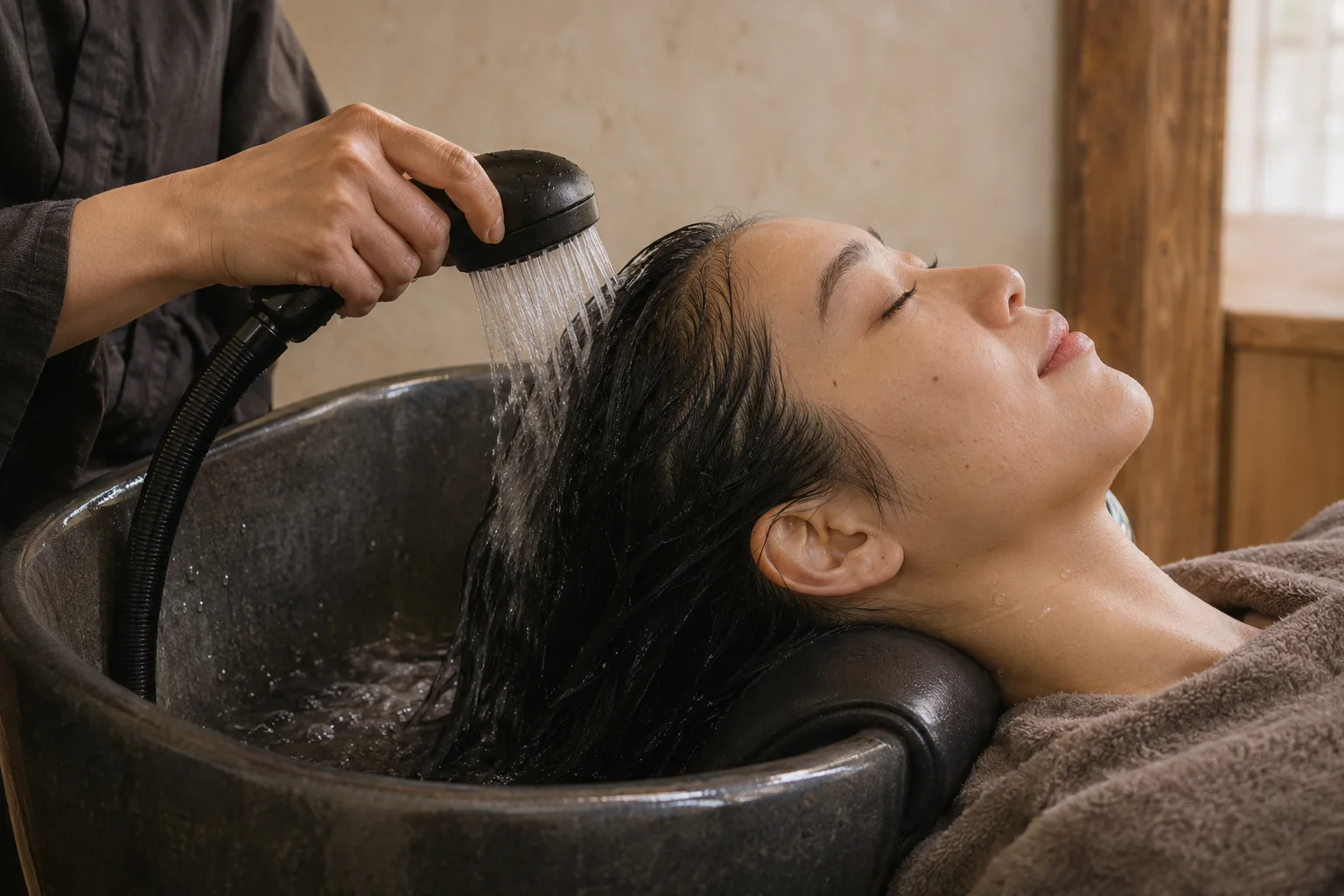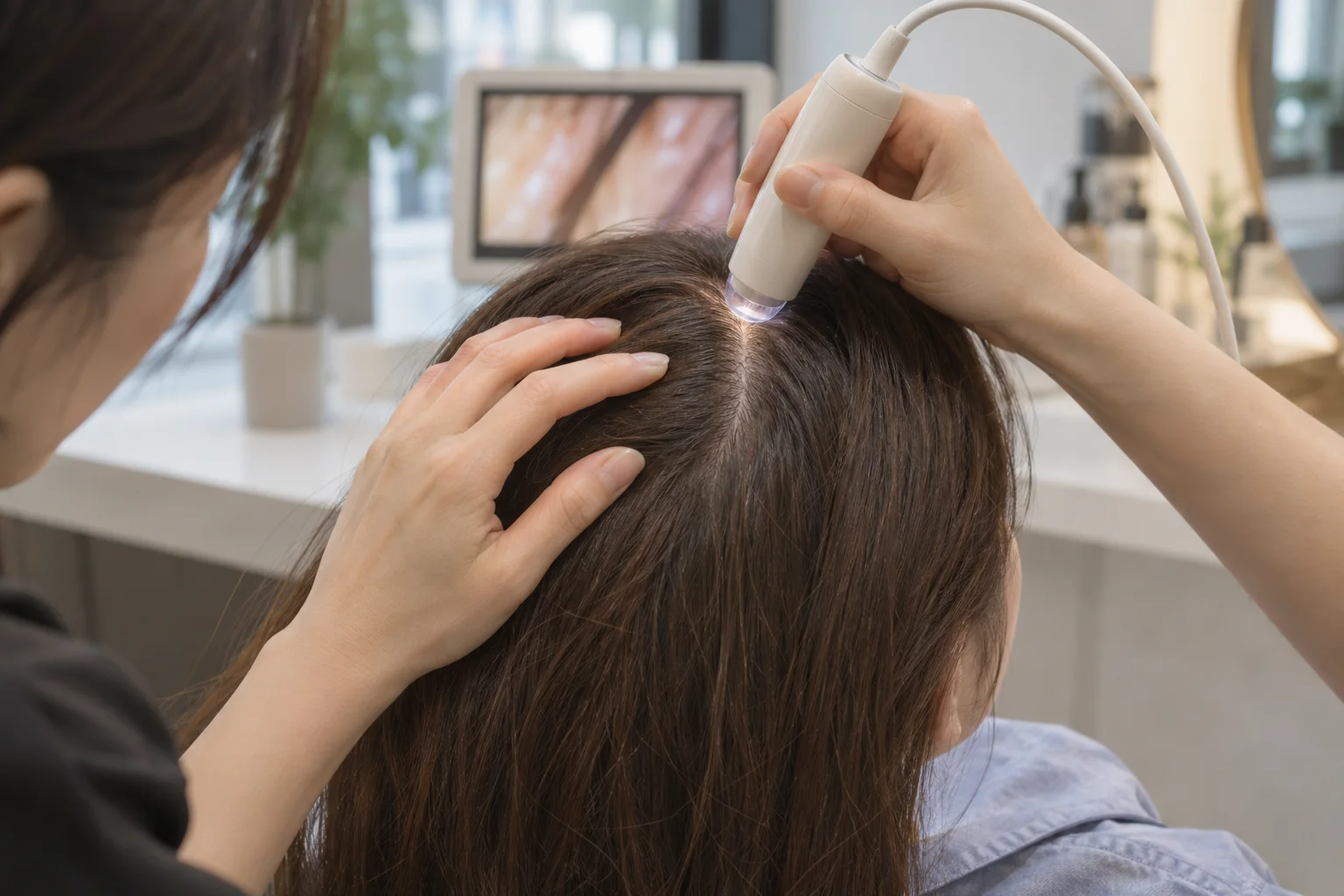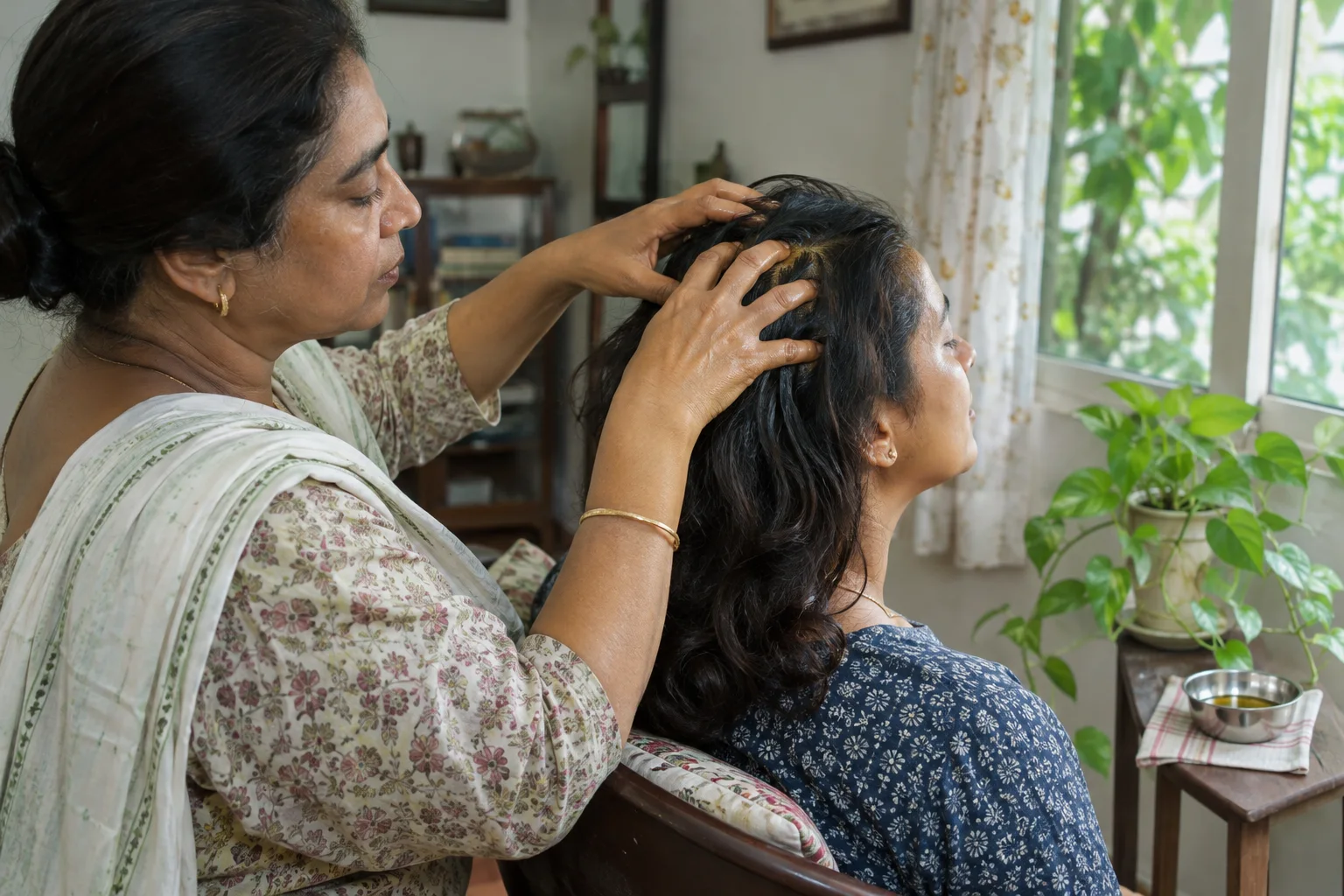
Champi: fingers work along the roots. The bowl holds the oil; this is not a forehead pour. AI illustration.
A small bowl can hide the most important detail of a spa menu. Is it holding oil that will stay in your roots, cream that will be rinsed from the lengths, or clay mixed with water? Each calls for a different gesture. An Indian champi, an Indonesian creambath and a Moroccan hammam that includes hair care are not three versions of the same treatment. Following the material from the bowl to your hair is a good way to understand what each offers.
India: oil and the time someone spends with their hands in your hair
For many people, the recognisable part of a champi is the touch of another person's fingers finding a parting and moving to the next section. Oil accompanies the massage in the form described by India's Central Board of Secondary Education. In a domestic setting, there need not be a salon basin, dryer or timer. The moment the hands lift away may be the end of the shared ritual; washing out the oil can be a separate part of the day.
In a salon, that distinction has practical consequences. Ask what oil the practitioner uses, whether it is scented, and whether shampoo and drying belong to the same appointment. If you normally like oil only on the ends, say so. The sensation of a worked scalp may be exactly what you are looking for, while the weight of oil at the roots might be something you would rather avoid before an evening out.
A picture of liquid running from a suspended vessel is showing another practice. In shirodhara as demonstrated by Kerala Tourism, the stream reaches the forehead while the guest reclines. The steady pour is the point of that stage. A salon may offer both massage and a pour; the two names still describe different actions. Someone who wants scalp kneading should ask for massage rather than booking the vessel in the photograph.
Indonesia: why the waiting time is part of a creambath
A conditioner in the shower usually has you watching the clock. A creambath turns that pause into part of the visit. Conditioning cream is worked through sections of hair and the scalp receives massage. At Espace Spa in Bali, the menu describes a steamer for the hair while the neck and shoulders are massaged. You can picture where the minutes go even before you sit down. Rudy Hadisuwarno's salons also offer creambaths in Indonesia, in the familiar setting of a hair appointment.
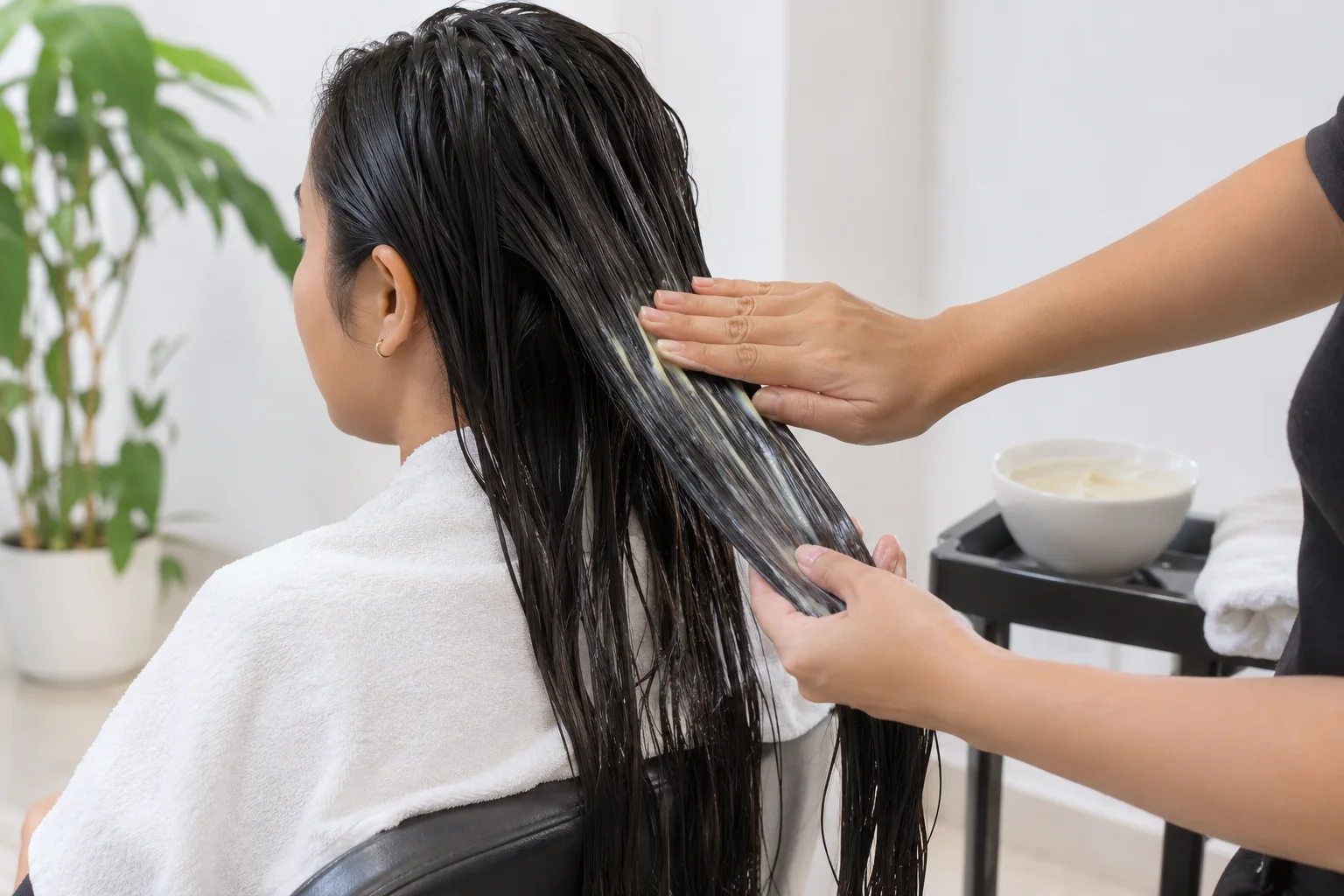
Choose by how you want your hair to behave afterwards. With fine lengths, you might want most of the conditioning product away from the roots. With a great deal of hair, having someone work through the back in sections may be the best part. Ask whether the person who applies the cream will also detangle and finish the hair. If you wear curls, describing the finish you want is more helpful than simply asking whether the salon “does curls”.
You can also ask to leave out a scented cream or a heated stage. Whether that is possible depends on the salon and its products. A creambath does not have to be the strongest or richest-looking item on the menu to be enjoyable. The right one is quite often the one that leaves you able to wear your hair the way you intended the next day.
Morocco: when rhassoul belongs to the bathing ritual
Rhassoul, also written ghassoul, is a clay. Mixed with water it forms a paste rather than the lather of a bottled shampoo. Morocco's national tourism office describes its use for both skin and hair in the context of the hammam. Here the larger ritual is bathing. A menu might offer a body treatment with clay, in which case there is no reason to assume your hair is included at all.
Ask where the paste will go and who does the rinsing. If hair is part of the service, find out whether you need to bring your own conditioner or whether the venue provides it. The answer matters to someone used to detangling with a slippery conditioner: the texture of a clay paste is quite different. You can book a hammam for the bathing experience and choose a separate salon appointment when you want sustained attention to your scalp.
Three questions that work across languages
Try asking: “Where does the product go? Does it stay in? How will you finish my hair?” You can point to your scalp, mid-lengths or ends as you ask the first question. The answers separate an oil massage followed by a trip home, a cream treatment and blow-dry, and a bath that never involves your hair. A brand name alone cannot give you that information.
If you know that a fragrance or botanical ingredient disagrees with you, tell the practitioner before anything is mixed. If your scalp is painfully irritated, save the ritual for another day and seek appropriate care. For an ordinary visit, take one detail from the menu and make it personal: the familiarity of hands at the roots, time spent conditioning the back of your hair, or the texture of clay as part of a bath. They are three good reasons to book three quite different experiences.
Explore the other traditions in the illustrated world guide.
Make time for yourself
Your next ritual begins here.
Discover massage, facial and hair spa experiences at our Bangkok sanctuary.
Explore your next visit ↗