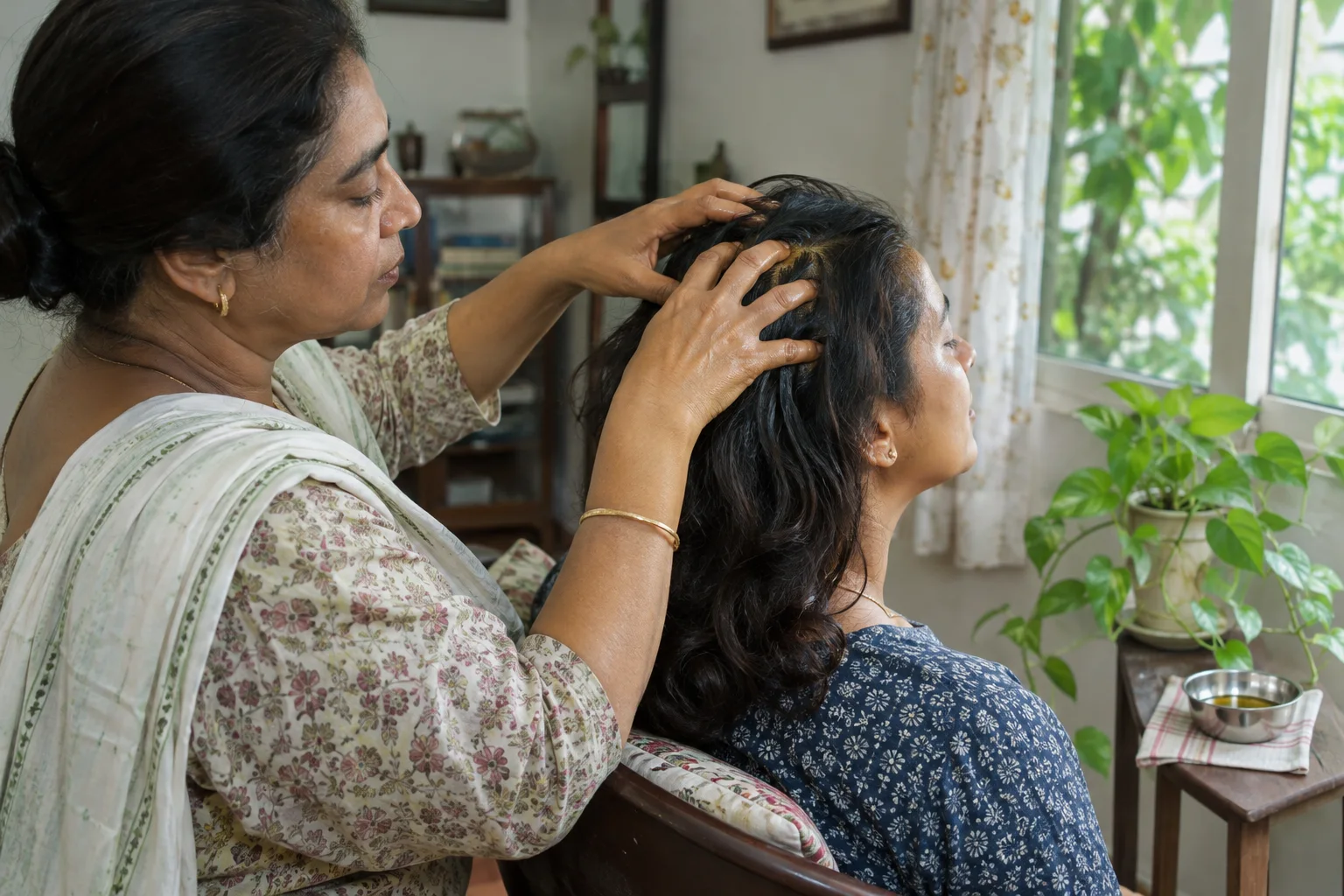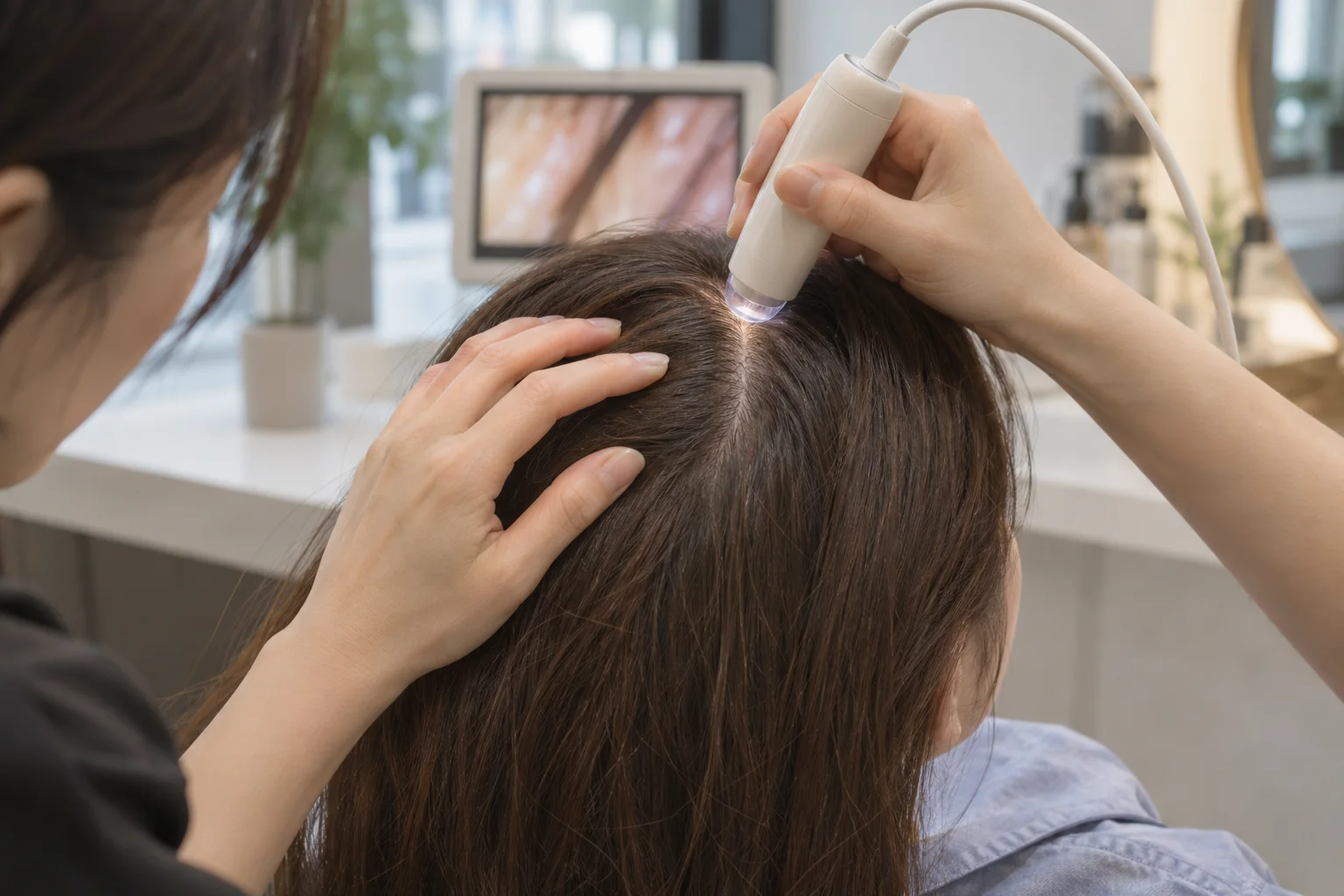
The small camera magnifies one parting so guest and stylist can look at the same area. AI illustration.
Picture two appointments that begin by parting the hair. In one, the stylist checks where the water will fall and asks if your neck feels comfortable against the basin. In the other, the practitioner holds a small camera to your parting and turns the monitor so you can see. Both visits may include washing, massage and drying. What differs is the role each step plays. Here is how to choose if your shortlist includes a Japanese-style head bath and a Korean-style scalp-care course.
First, find out where the session begins
A water-led session works best when you can settle into the basin. Before the first rinse, ask to adjust the chair if you have to lift your chin to reach the neck rest. Mention if you dislike water near your ears, or if the sound of a shower close to your head bothers you. These small requests are easier to accommodate before your hair is wet. If the salon has several water treatments, ask the stylist to describe the one you actually booked.
A consultation-led visit starts with a different kind of participation. You might be asked when you last washed your hair and what you have put on it since. Tell the practitioner if you used dry shampoo, a leave-in cream or styling wax. A visible speck on a magnified image needs that context. If you want to see the after-image, ask the practitioner to show you the same parting and tell you what, specifically, they are comparing.
Three ways to use water
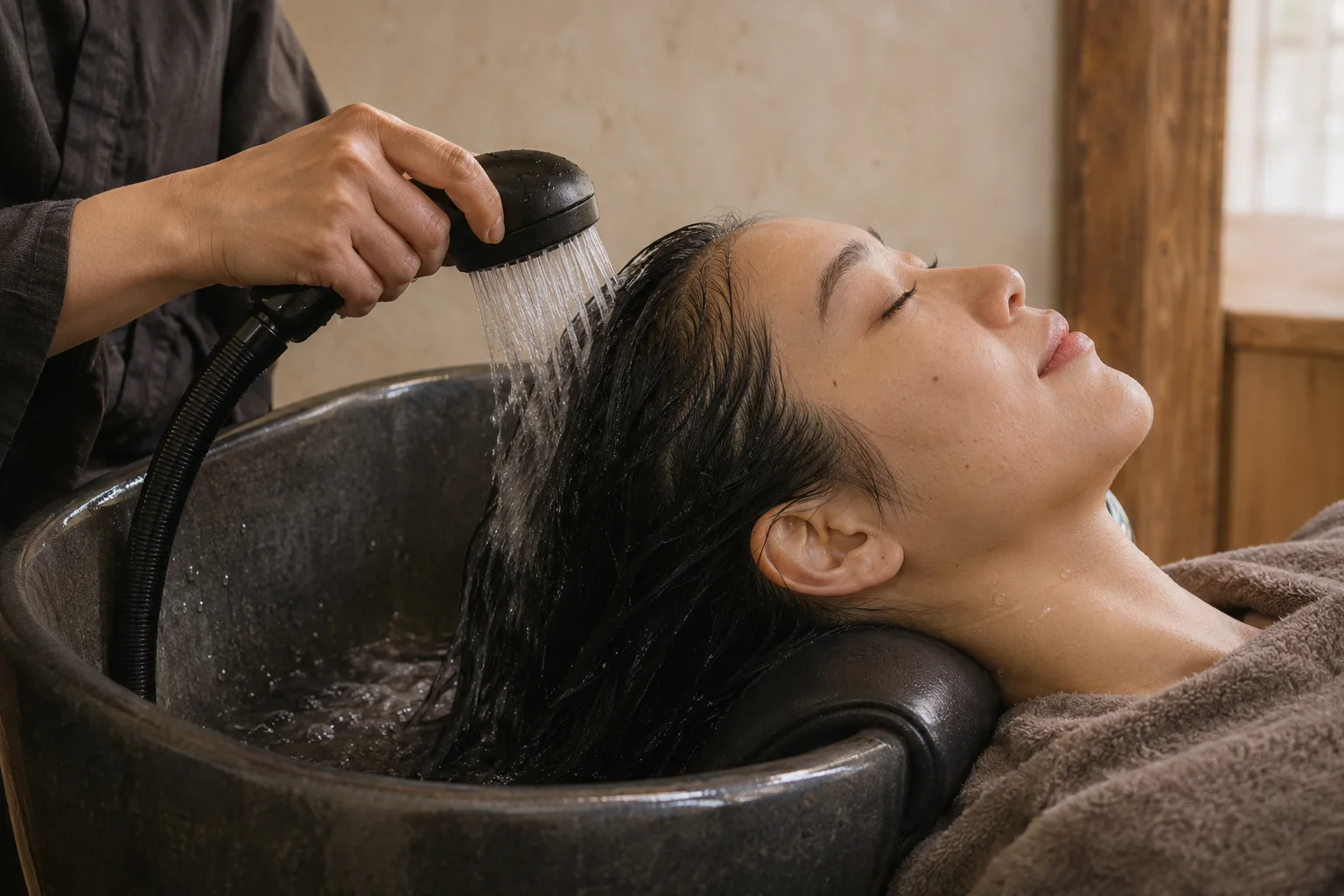
A handheld spray lets a stylist direct water behind the hairline and into the lengths. During a shampoo it has a straightforward job: to carry away cleanser. A water ring can send several small streams over the hair together; the sensation comes from their pattern and repetition. Neither device, on its own, means that part of the head is immersed.
A head bath puts water around the hair as well as over it. Takara Belmont's YUME system is a concrete example: water runs at the edge of the hairline, with the back of the head supported in the filled basin. Listen for the difference between “you will have a head bath” and “we use a Japanese reclining wash station”. A reclining chair gives the stylist a way to work. It does not tell you which attachment the salon owns, or whether the bath is included in your rate.
What “scaling” means on a Korean menu
Read the word as a prompt to ask about the cleansing stage. You may meet an exfoliating product, shampoo, steam or a combination. At Eco Jardin's Cheonho branch in Seoul, for example, one published sequence includes scalp imaging, a scrub, steam, shampoo and another look at the scalp. Its longer course adds a scalp massage, herbal scalp pack and steam mist cap. Those are checkable features of two specific appointments. Another Seoul salon can organise its time differently.
A camera makes a small area look very large. It can be useful for pointing out where a product is sitting or where you would prefer less friction. It cannot show in one visit whether hair is growing, or establish the cause of scaling or thinning. A good question is “What can we change about today's wash on the basis of this picture?” A persistent itch or a sore patch is a separate matter; the American Academy of Dermatology explains why identifying the cause matters.
Compare the quiet minutes, not the step count
Imagine you have an hour and want to spend as much of it as possible with your eyes closed. A fifteen-step course may include conversation, preparing equipment, rinsing and drying. An hour on the menu does not buy an hour of massage. Ask how long the hands-on portion usually lasts and whether you can skip commentary during it. You may be happier with a shorter course that puts its time into precisely the part you enjoy.
If, instead, you are curious about your daily washing routine, conversation may be the best part. Bring the name of the styling product you find hard to rinse out. Ask the practitioner to explain where they apply conditioner and how they rinse dense hair underneath. You should leave able to describe one useful observation, whether or not you buy a product.
Decide how you want to leave
The last ten minutes can decide whether a wet session fits your day. A towel dry, a simple dryer finish and a brush blowout are different services. For curls, ask about a diffuser, styling product and whether you can wear the hair in its natural pattern. If you wear extensions, tell the salon about the attachment method before booking. The time and handling it can offer may change which option makes sense.
If you like the sound of touch but none of the wet finishing, look for a Japanese dry head spa. If you want a wash and facial care in one visit in Bangkok, compare the House of Pridi hair and scalp menu. The most useful booking request is specific: “I'd like warm water around the hairline, gentle pressure, and enough time to leave with my hair dry.” A salon can tell you whether it offers exactly that.
Return to the illustrated world guide.
Make time for yourself
Your next ritual begins here.
Discover massage, facial and hair spa experiences at our Bangkok sanctuary.
Explore your next visit ↗