


Modern work often means long hours in front of a computer, frequent smartphone use, and spending much of the day in the same position. Over time, this lifestyle can contribute to persistent muscle tension, stiffness, and discomfort, particularly around the neck, shoulders, upper back, and lower back. In Thailand, this collection of work-related symptoms is commonly known as Office Syndrome.
Office Syndrome is not a single medical condition. Rather, it describes a group of muscle and soft-tissue symptoms associated with prolonged sitting, repetitive movements, limited movement, and poor or sustained posture. Bangkok Hospital notes that prolonged computer use and unhealthy sitting positions can contribute to muscle tightness and pain, especially around the neck, shoulders, and back.
For people who spend most of their day working at a desk, incorporating regular movement, ergonomic adjustments, stretching, and appropriate massage into a wellness routine can help manage everyday muscle tension and encourage greater physical comfort.
What Causes Office Syndrome?
Office Syndrome often develops gradually rather than appearing suddenly. Holding the body in the same position for extended periods places repeated stress on certain muscle groups. Using a laptop, computer mouse, keyboard, or smartphone for many hours can reinforce these patterns.
Common contributing factors include:
- Long periods of sitting without movement breaks
- Working with the head positioned forward toward a screen
- Rounded shoulders or a slouched sitting position
- Repetitive keyboard and mouse movements
- Frequent smartphone or tablet use
- An improperly arranged desk, chair, or computer screen
- Lack of regular stretching or physical activity
- Stress and insufficient rest
These habits can gradually create muscle tightness and discomfort. Symptoms may become particularly noticeable after a long workday or during periods of increased workload.
Common Signs of Office Syndrome
The symptoms associated with Office Syndrome can vary from person to person. Common complaints include:
- Neck stiffness or soreness
- Tight or aching shoulders
- Upper-back tension
- Lower-back discomfort
- Muscle fatigue after sitting for long periods
- Headaches associated with neck and shoulder tension
- Reduced flexibility or feeling stiff when moving
- Tender areas or muscle knots
Some people may also experience pain that radiates toward the head or arms, or sensations such as numbness or tingling. These symptoms should not automatically be assumed to be simple muscle tension. If pain persists, becomes severe, or is accompanied by significant numbness or weakness, professional medical evaluation is recommended.
How Can Massage Help With Office Syndrome?
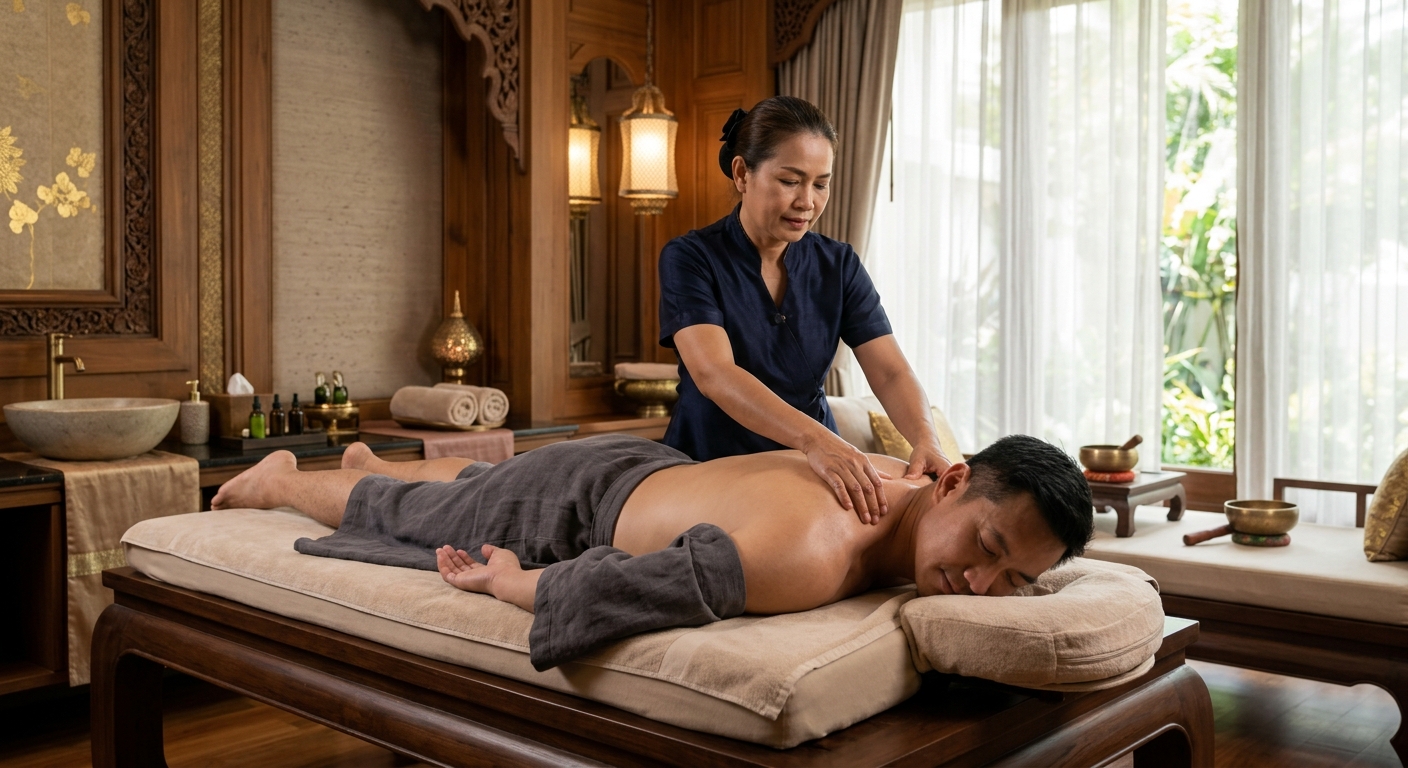
Massage can be a useful part of a broader approach to managing everyday muscle tension caused by prolonged desk work. Rather than simply providing general relaxation, a targeted massage can focus on areas that commonly become tight during long periods of sitting and repetitive activity.
1. Relieving Neck and Shoulder Tension
The neck and shoulders are among the areas most affected by prolonged computer work. Keeping the head forward or shoulders raised for extended periods can place additional strain on the surrounding muscles.
Targeted massage techniques can focus on these areas, helping reduce the sensation of tightness and promoting a greater feeling of relaxation and mobility.
2. Releasing Tight Muscles
When muscles remain under repeated tension, they can feel stiff, tired, or tender. Massage uses controlled pressure and hands-on techniques to work with areas of muscular tension.
Depending on the treatment and individual needs, techniques such as deeper pressure, stretching, or focused work around tense muscle groups may be incorporated.
3. Supporting Flexibility and Mobility
Long periods of sitting can make the body feel less mobile, particularly around the neck, shoulders, hips, and back. Massage combined with appropriate stretching may help the body feel more comfortable moving after spending hours in a fixed position.
Traditional Thai Massage, for example, incorporates stretching and pressure-based techniques and can be part of a broader wellness routine focused on maintaining flexibility and relaxation.
4. Encouraging Relaxation After a Long Workday
Office work does not only affect the body. Deadlines, screen time, meetings, and constant concentration can also make it difficult to fully switch off at the end of the day.
A quiet massage environment gives you an opportunity to step away from work, slow down, and focus on physical relaxation. This combination of targeted bodywork and a peaceful environment can make massage a valuable part of a regular self-care routine.
5. Helping You Become More Aware of Muscle Tension
Many people do not notice how much tension they carry until they receive focused bodywork. A massage session can help you recognize areas that repeatedly become tight, encouraging you to pay more attention to posture, movement breaks, stretching, and daily habits.
What Type of Massage Is Suitable for Office Syndrome?
There is no single massage technique that is appropriate for everyone. The most suitable treatment depends on where you feel tension, how intense your discomfort is, your mobility, and your personal preferences.
Office Syndrome Massage
A dedicated Office Syndrome Massage focuses specifically on areas commonly affected by desk work, including the neck, shoulders, back, and other areas of accumulated muscular tension. House of Pridi offers an Office Syndrome treatment designed to address work-related strain, using targeted massage techniques and stretching to help ease tension and restore comfort.
Traditional Thai Massage
Traditional Thai Massage combines pressure-based techniques with assisted stretching. It can be an option for people who want a more comprehensive full-body treatment while incorporating movement and stretching into their massage experience.
Deep Tissue Massage
For people who experience pronounced muscular tightness, Deep Tissue Massage may provide a more focused approach. House of Pridi offers Deep Tissue Massage in 60-, 90-, and 120-minute sessions.
Head & Shoulder Massage
If your work primarily leaves you with tension around the neck, shoulders, and head, a focused Head & Shoulder Massage may be a convenient option. House of Pridi offers 60- and 90-minute Head & Shoulder Massage sessions specifically aimed at helping relax upper-body tension.
Massage Is Only Part of the Solution
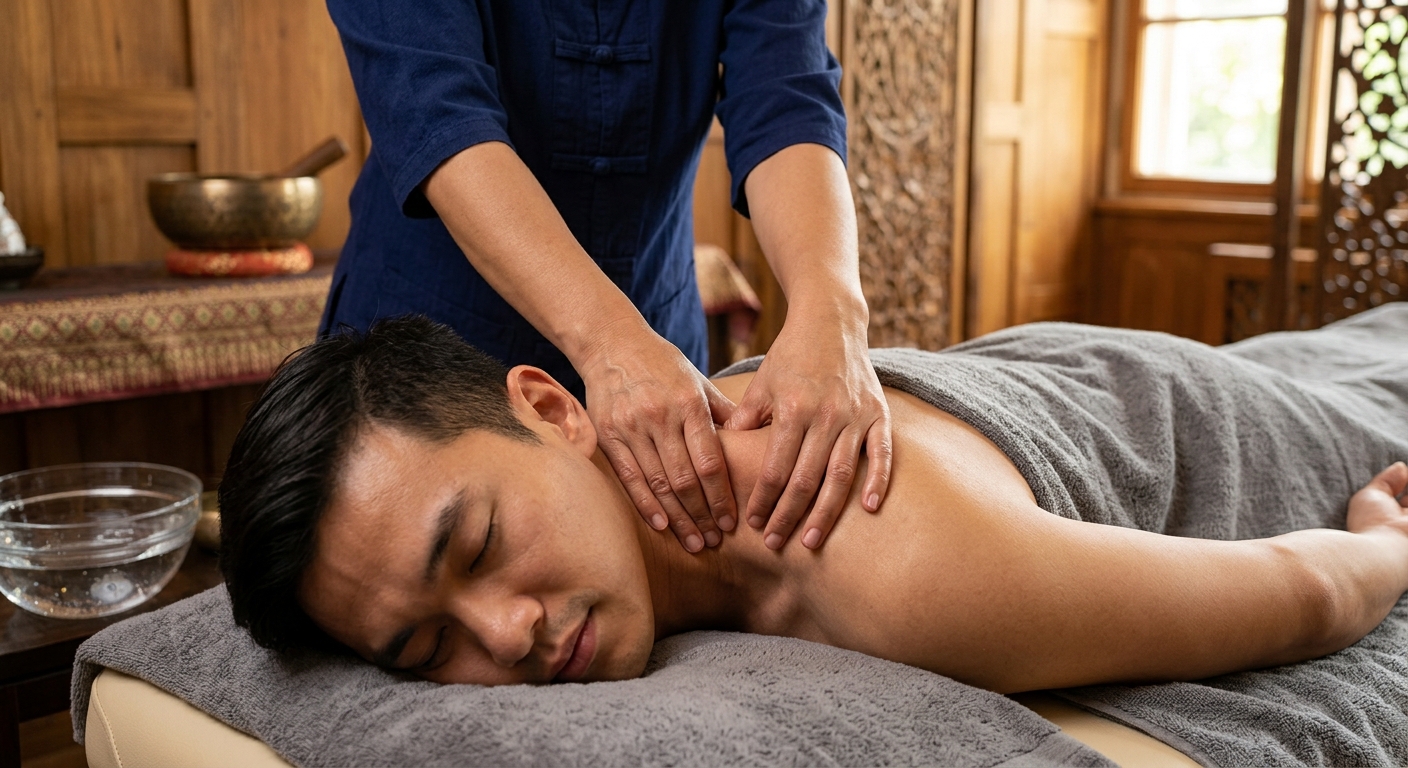
While massage can help manage muscle tension and provide relaxation, it should not replace healthy daily habits. If your working routine repeatedly creates the same strain, addressing the underlying habits is equally important.
Try incorporating simple changes into your workday:
- Take regular movement breaks instead of remaining seated for hours.
- Change position throughout the day.
- Keep your computer screen at a comfortable height.
- Position your keyboard and mouse so your arms can remain relaxed.
- Stretch gently during breaks.
- Include regular physical activity outside working hours.
- Pay attention to recurring areas of tension.
- Allow enough time for rest and recovery.
Ergonomic adjustments and regular movement are particularly important because massage alone cannot eliminate the habits that contribute to recurring discomfort. Bangkok Hospital also emphasizes changing position, addressing posture, and reducing prolonged static sitting as part of Office Syndrome prevention.
When Should You Seek Professional Advice?
Occasional muscle tightness after a long day at the computer is common, but persistent or unusual symptoms deserve attention. If discomfort continues despite changes to your routine, becomes increasingly painful, or is accompanied by numbness, tingling, weakness, or pain extending into the arms or legs, consider consulting a qualified healthcare professional.
Massage is most appropriate as part of a wellness and self-care routine when the symptoms are suitable for massage. A trained therapist should also be informed about any existing injuries, medical conditions, or areas of significant pain before treatment.
Make Time for Your Body After a Busy Workday
Office Syndrome is a reminder that the body needs movement, recovery, and attention even when work keeps you sitting at a desk for most of the day. Small changes to posture and daily activity can make a meaningful difference, while massage can provide an opportunity to release accumulated tension and reconnect with your body.
At House of Pridi, the dedicated Office Syndrome Massage is available in 90- and 120-minute sessions, alongside Traditional Thai Massage, Deep Tissue Massage, Head & Shoulder Massage, and other wellness treatments. The spa combines traditional Thai wellness approaches with a calm, heritage-inspired setting in Bangkok.
Whether you are dealing with the effects of long hours at a computer or simply looking for a moment to step away from a demanding schedule, a thoughtfully chosen massage can be a relaxing addition to your regular wellness routine.
Discover Office Syndrome Massage at House of Pridi
Located on Sukhumvit 71 near Phra Khanong BTS, House of Pridi offers a range of massage and wellness experiences designed for modern lifestyles. Take a break from your desk, give your body time to unwind, and discover a more restorative approach to your work-life routine.
House of Pridi by Loft Thai Spa
Sukhumvit 71, Bangkok
Office Syndrome Massage: 90 or 120 minutes